Odor Removal and Deodorization in Bakersfield
24/7 odor removal and deodorization in Bakersfield and surrounding areas. IICRC-certified, insurance billing accepted. Call (661) 393-9306.
A week after the fire is out, the smoke smell is still there — embedded in drywall, soaked into upholstery, hiding inside the HVAC ducts. Or maybe a pet accident soaked through carpet padding into the subfloor, and every warm afternoon brings it back. Surface cleaning and air fresheners don’t reach the source molecules; they just mask them temporarily. Professional odor removal works at the molecular level, neutralizing the compounds that cause the smell rather than layering fragrance on top of them.
What odor removal and deodorization actually involves
Odor molecules bond to porous materials — wood framing, drywall paper, fabric fibers, concrete — and off-gas continuously until the source is either physically removed or chemically neutralized. The tools that accomplish this are very different from household products.
Thermal fogging uses a petroleum- or water-based deodorizing solution heated into a fine fog that penetrates the same porous surfaces smoke and odor molecules reached. It’s particularly effective after fire and smoke events because the fog particle size mimics how smoke traveled through the structure.
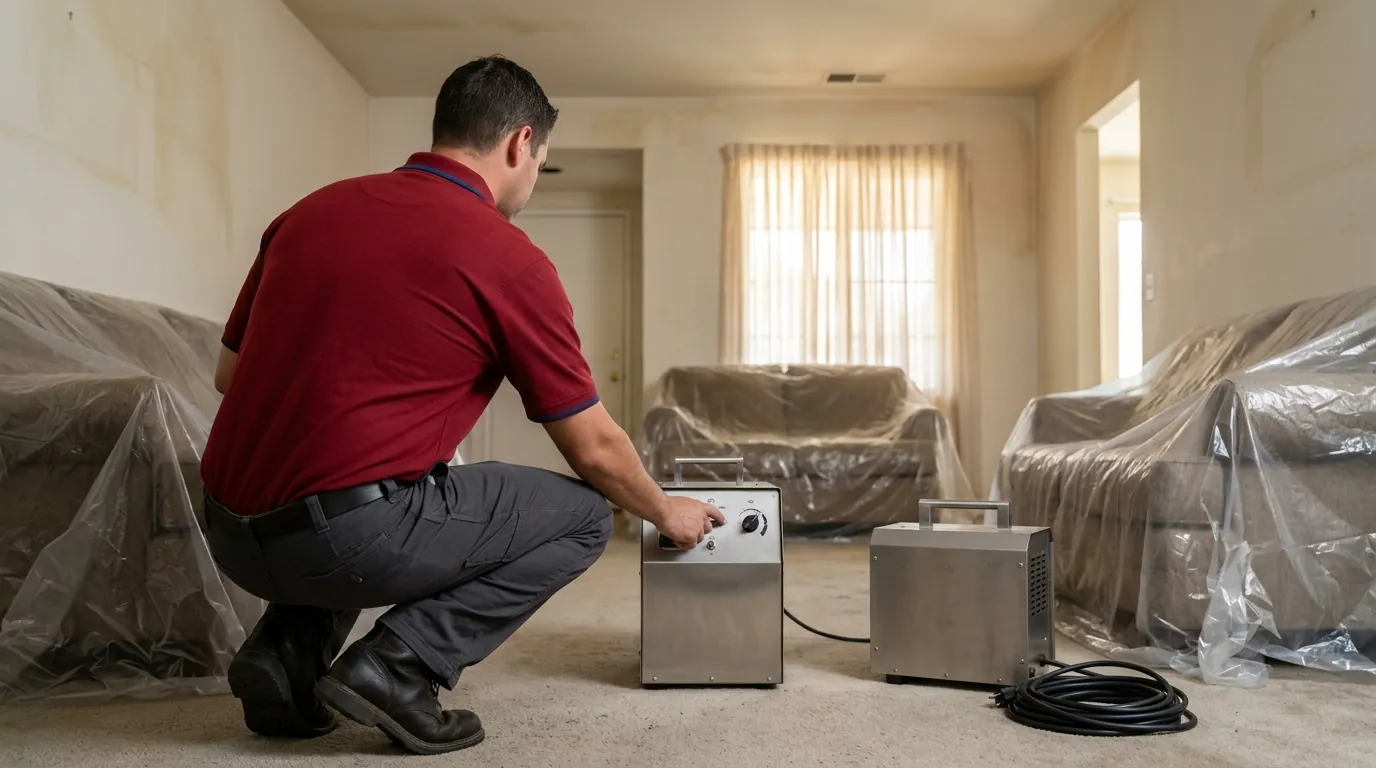
Hydroxyl generators produce hydroxyl radicals — the same oxidizing molecules the atmosphere uses to break down pollutants — without requiring the space to be vacated. They’re safe around electronics, artwork, and occupied adjacent spaces, and work continuously over 24–72 hours.
Ozone treatment is one of the most powerful tools available for severe smoke or biological odors. Ozone (O₃) oxidizes odor-causing compounds on contact, but the space must be unoccupied during treatment and properly ventilated afterward. It’s not a first-resort tool — it’s used when the odor load is high and other methods alone won’t reach embedded sources.
Enzyme-based treatments target biological odors (urine, decomposition, mold byproducts) by breaking down the organic molecules that bacteria feed on. Without removing the food source, bacterial odor production continues even after the visible contamination is gone.
Timeline varies by severity. A localized pet odor in a single room may resolve in one to two days. A whole-structure smoke odor after a working fire can require four to seven days of active treatment across multiple methods.
Our process
-
Source identification and odor mapping. Before any equipment is deployed, a technician walks the structure to identify every odor source — not just the obvious ones. Smoke migrates through wall cavities and settles in attic insulation. Urine wicks laterally through subfloor. Mold odor can originate inside HVAC systems. Skipping this step means treating symptoms while the source keeps producing.
-
Source removal or pre-treatment. Where possible, the physical source comes out first — saturated carpet padding, charred materials, contaminated insulation. Deodorization equipment cannot fully neutralize an active, ongoing source. Enzyme treatments are applied to porous surfaces with biological contamination before fogging or ozone begins.
-
Structural deodorization. Thermal fogging and/or hydroxyl treatment is applied throughout the affected areas. For smoke events, this includes inside wall cavities if the fire caused structural penetration, inside ductwork, and in the attic if smoke traveled there. Ozone treatment is staged for spaces with the highest residual odor load.
-
HVAC system treatment. Odor molecules circulate through the air handling system and redeposit throughout the structure every time the system runs. Duct cleaning and in-duct deodorization are a required step on any whole-home odor job — not an optional add-on.
-
Post-treatment verification. A final walkthrough with the homeowner confirms odor levels are within acceptable range. If any area still registers, targeted re-treatment is applied before the job is closed.
What separates a good odor removal response from a bad one
The most common failure in odor removal is treating the air instead of the source. A technician who deploys an ozone machine in a room without first removing saturated carpet padding or charred wood is masking a problem that will return within days — especially in Bakersfield’s summer heat, when off-gassing accelerates significantly.
A second common mistake is skipping the HVAC system. Smoke and biological odors circulate through ductwork and coat the interior surfaces of supply and return lines. Any deodorization job that doesn’t address the air handling system is incomplete by definition.
Insurance adjusters reviewing odor claims look for documentation of source identification, the specific methods and products used, dwell times for ozone or hydroxyl treatment, and post-treatment verification. A scope of work that just says “deodorization applied” without specifying method, area, and duration is often challenged during the claim review.
Ozone misuse is also a real risk. Applying ozone in concentrations that are too high, or failing to properly ventilate afterward, can damage rubber seals, certain plastics, and artwork. IICRC-certified technicians are trained on appropriate concentration levels and safe re-entry protocols.
Seasonal and regional considerations
Bakersfield’s climate creates specific odor challenges. Summer temperatures regularly exceed 100°F, which accelerates the off-gassing of volatile organic compounds from smoke residue and biological sources — meaning an odor that seems manageable in April can become overwhelming by July if not fully remediated. The San Joaquin Valley’s low humidity in summer also means materials dry quickly after water intrusion, but biological odors from any residual moisture can concentrate rather than dissipate.
Wildfires in the surrounding Kern County foothills and mountains periodically push smoke into residential neighborhoods, leaving a fine layer of combustion particulate on surfaces inside homes — even homes that weren’t directly threatened. This type of ambient smoke exposure often goes untreated because there’s no visible damage, but the odor compounds remain active on porous surfaces.
Service area
ProRestoration Services handles odor removal and deodorization jobs throughout Bakersfield and the surrounding Kern County area, including Oildale, Rosedale, Shafter, Wasco, Delano, Tehachapi, and Ridgecrest. City-specific pages for each area link back here for full technical detail on the process.
If the smell came back, or if it never fully went away after a previous attempt, call (661) 393-9306 any time — day or night — to schedule a source assessment and get a clear plan for eliminating it.
Frequently Asked Questions
What is the difference between ozone treatment and hydroxyl deodorization, and when is each one used?
Why does smoke odor come back days or weeks after a fire, even after cleaning?
How do you treat pet urine odor that has soaked through carpet into the subfloor?
Does thermal fogging damage furniture, electronics, or clothing left in the space?
How does odor documentation work for an insurance claim after a fire or water loss?
Looking for the best odor removal and deodorization company in Bakersfield?
ProRestoration Services provides licensed and insured odor removal and deodorization in Bakersfield, CA and the surrounding area. We answer calls 24/7 — call (661) 393-9306 for immediate help.
Need Odor Removal and Deodorization now?
We respond 24/7 across Bakersfield and surrounding CA cities.
Related Coverage
- Our Restoration Services
- Contact ProRestoration Services
- Odor Removal and Deodorization in Arvin
- Odor Removal and Deodorization in Bakersfield
- Odor Removal and Deodorization in Delano
- Odor Removal and Deodorization in Lake Isabella
- Odor Removal and Deodorization in Lamont
- Odor Removal and Deodorization in Oildale
- Odor Removal and Deodorization in Rosedale
- Odor Removal and Deodorization in Shafter
- Odor Removal and Deodorization in Taft
- Odor Removal and Deodorization in Tehachapi
- Odor Removal and Deodorization in Wasco