Smoke Damage Restoration in Bakersfield
24/7 smoke damage restoration in Bakersfield and surrounding areas. IICRC-certified, insurance billing accepted. Call (661) 393-9306.
Smoke doesn’t stop moving when the fire goes out. Within hours of extinguishment, acidic soot particles migrate into wall cavities, HVAC ductwork, and the fibers of upholstered furniture — embedding odor compounds that no amount of airing out will neutralize. The visible char is obvious; the invisible residue is what causes lasting damage to surfaces, air quality, and personal property if it isn’t addressed in the right sequence, with the right chemistry, fast.
What smoke damage restoration actually involves
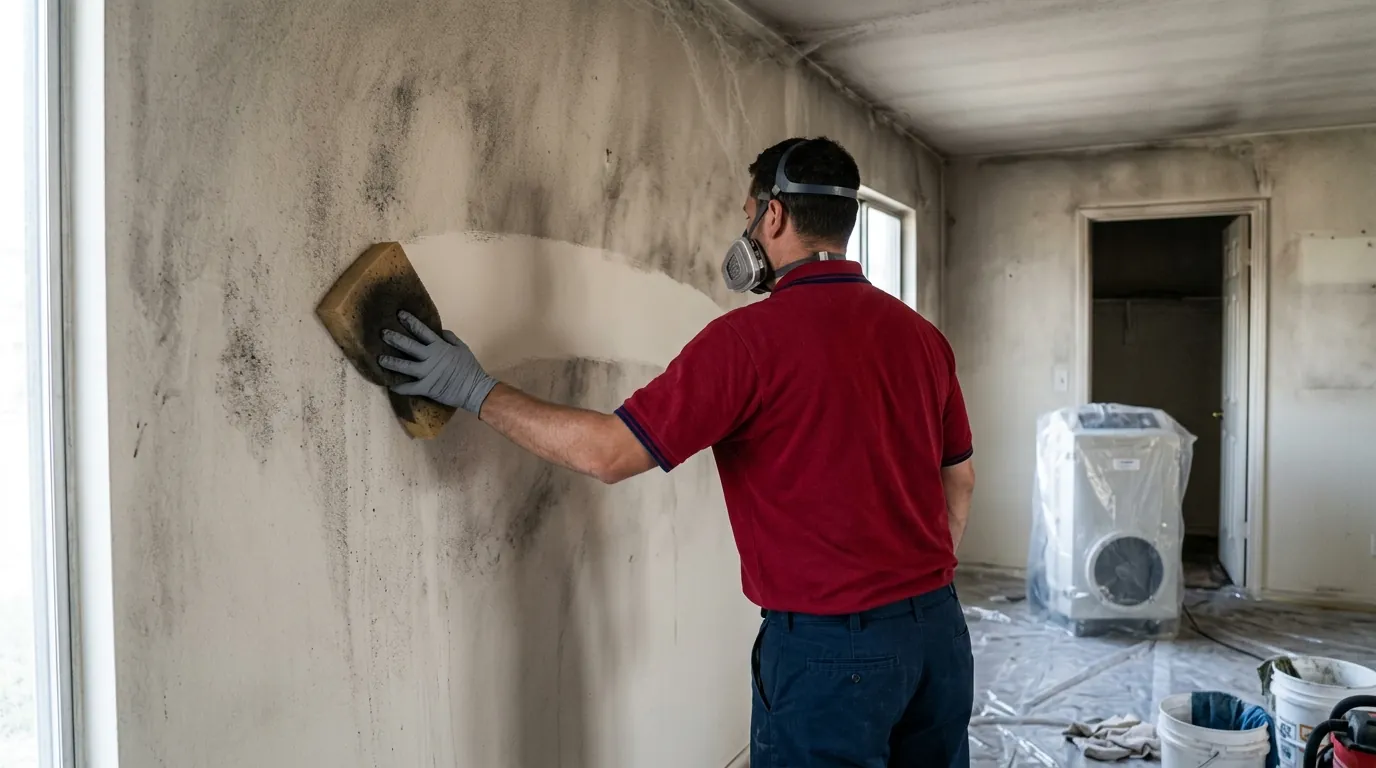
Smoke damage restoration is a multi-phase discipline that’s distinct from fire debris removal or general cleaning. The core challenge is that smoke residue comes in several chemically different forms — wet protein soot from kitchen fires, dry powdery soot from fast-flaming combustion, and the oily, pungent residue left by synthetic materials like carpet, foam insulation, and plastics — and each type requires a different cleaning agent and technique. Scrubbing wet-soot residue with a dry sponge, or applying a general-purpose cleaner to synthetic soot, can permanently set the stain and drive the odor deeper into porous materials.
Equipment on a properly executed smoke job includes thermal foggers, hydroxyl generators or ozone machines (used in unoccupied spaces), HEPA air scrubbers, and specialized chemical sponges and alkaline cleaners matched to the soot type. Ductwork is inspected and often cleaned separately, because HVAC systems can re-circulate smoke particles throughout an entire structure long after the source room has been treated. Timeline depends on the fire’s size and fuel type, but most residential smoke restoration projects run three to seven days from initial assessment to final clearance.
Our process
-
Soot characterization and scope assessment. Before any cleaning begins, the crew identifies the soot type present — dry, wet, or protein-based — and maps affected zones throughout the structure, including areas outside the room of origin. HVAC registers, attic access points, and shared wall cavities are checked. This step determines which cleaning chemistry and deodorization method will be used in each zone.
-
Structural surface cleaning. Walls, ceilings, and hard surfaces are cleaned in the correct sequence (top-down, working away from the fire’s origin) using dry chemical sponges for powdery soot or alkaline cleaners for oily synthetic residues. Porous materials that cannot be cleaned — heavily saturated drywall, insulation, or ceiling tile — are documented for removal and replacement rather than treated in place, which would trap odor.
-
Contents evaluation and pack-out. Salvageable personal property — clothing, furniture, electronics, documents — is inventoried and either cleaned on-site or transported to a controlled facility for ultrasonic or ozone treatment. Items that cannot be restored are documented with photos and descriptions for your insurance claim. Nothing is discarded without your sign-off.
-
Thermal fogging and deodorization. Once surfaces are clean, thermal fogging disperses a deodorizing agent in a particle size that penetrates the same pathways smoke traveled — wall voids, subfloor gaps, fabric fibers. In unoccupied spaces, ozone treatment may follow. These aren’t masking agents; they chemically alter the odor compounds at the molecular level.
-
Final air quality verification and HVAC inspection. Air scrubbers run until particulate counts drop to acceptable levels. Ductwork is inspected, and if contaminated, cleaned before the HVAC system is returned to service. A final walkthrough confirms no residual odor pockets remain before the job is closed.
What separates a good smoke damage response from a bad one
The most common failure point is treating smoke damage like a cleaning job rather than a restoration job. General contractors or janitorial crews who aren’t trained in soot chemistry often paint over residue without sealing it first — the odor bleeds through within weeks. Protein soot from kitchen fires is particularly easy to miss; it leaves an almost invisible film on walls that smells intensely of cooked organic matter and requires enzymatic or alkaline treatment, not standard degreasers.
A second failure point is ignoring the HVAC system. Smoke particles are typically 0.1 to 4 microns — small enough to travel freely through return-air vents and redistribute through every room in the house. Restoration that doesn’t address ductwork will leave a structure that smells clean on day one and smoky again by day thirty.
Insurance adjusters look for itemized documentation of affected materials, soot type notes in the job report, and a clear distinction between cleanable and non-cleanable items. Adjusters also look for evidence that deodorization was performed with appropriate equipment — not just spray-and-wipe — because inadequate odor treatment is a common source of supplement claims months after the initial settlement.
ProRestoration Services is IICRC Certified and an EPA Lead-Safe Certified Firm (License #960566), which matters on older Bakersfield homes where lead-containing paint may be disturbed during surface cleaning or material removal.
Seasonal and regional considerations
Bakersfield and the surrounding San Joaquin Valley face two distinct wildfire smoke windows: the dry eastern Sierra foothills fire season that typically runs June through October, and wind-driven events that push smoke from Kern County foothill fires directly into valley neighborhoods. Wildfire smoke cleanup differs from structure fire cleanup — the soot is finer, travels farther into the building envelope, and often contaminates HVAC filters and ductwork even when there’s no visible residue on surfaces. Homes with evaporative coolers, common in Bakersfield’s hotter months, are especially vulnerable because the pads draw outside air continuously and can pull smoke particulate directly into living spaces.
Service area
ProRestoration Services responds to smoke damage calls throughout Bakersfield and the surrounding communities, including Shafter, Wasco, Delano, Tehachapi, Taft, Arvin, and McFarland. City-specific pages for each area link back to this page for full technical detail on the restoration process.
If your home or property smells like smoke — whether from a kitchen fire, a wildfire event, or a neighbor’s structure fire that pushed residue through shared walls — call (661) 393-9306 any time, day or night. The sooner soot is addressed, the more surfaces and contents can be saved. Begin smoke and soot removal before the residue sets permanently.
Frequently Asked Questions
What is the difference between dry soot, wet soot, and protein soot — and why does it change how my home is cleaned?
How long does smoke odor linger if surfaces aren't properly treated, and what does 'properly treated' actually mean?
Can wildfire smoke cause the same kind of interior damage as a structure fire, even if my home never caught fire?
What should I do — and not do — in the hours between a fire and when the restoration crew arrives?
How do insurance adjusters evaluate a smoke damage claim, and what documentation should I expect from a professional restoration company?
Looking for the best smoke damage restoration company in Bakersfield?
ProRestoration Services provides licensed and insured smoke damage restoration in Bakersfield, CA and the surrounding area. We answer calls 24/7 — call (661) 393-9306 for immediate help.
Need Smoke Damage Restoration now?
We respond 24/7 across Bakersfield and surrounding CA cities.
Related Coverage
- Our Restoration Services
- Contact ProRestoration Services
- Smoke Damage Restoration in Arvin
- Smoke Damage Restoration in Bakersfield
- Smoke Damage Restoration in Delano
- Smoke Damage Restoration in Lake Isabella
- Smoke Damage Restoration in Lamont
- Smoke Damage Restoration in Oildale
- Smoke Damage Restoration in Rosedale
- Smoke Damage Restoration in Shafter
- Smoke Damage Restoration in Taft
- Smoke Damage Restoration in Tehachapi
- Smoke Damage Restoration in Wasco
- The Fire Damage Restoration Process, Explained
- How Professionals Remove Smoke Odor (and Why DIY Usually Fails)