Sewage Cleanup and Sanitization in Bakersfield
24/7 sewage cleanup and sanitization in Bakersfield and surrounding areas. IICRC-certified, insurance billing accepted. Call (661) 393-9306.
When a sewer line backs up or a septic system overflows, what comes up with it isn’t just water — it’s Category 3 “black water” carrying fecal coliform bacteria, hepatitis-risk pathogens, and aerosolized contaminants that can colonize porous materials within hours. The smell hits first. Then you notice the discoloration spreading under baseboards, soaking into drywall, wicking up carpet tack strips. Every minute that sewage sits, the remediation scope grows and the health risk compounds. This is one of the few restoration situations where the clock is genuinely working against you.
What sewage cleanup and sanitization actually involves
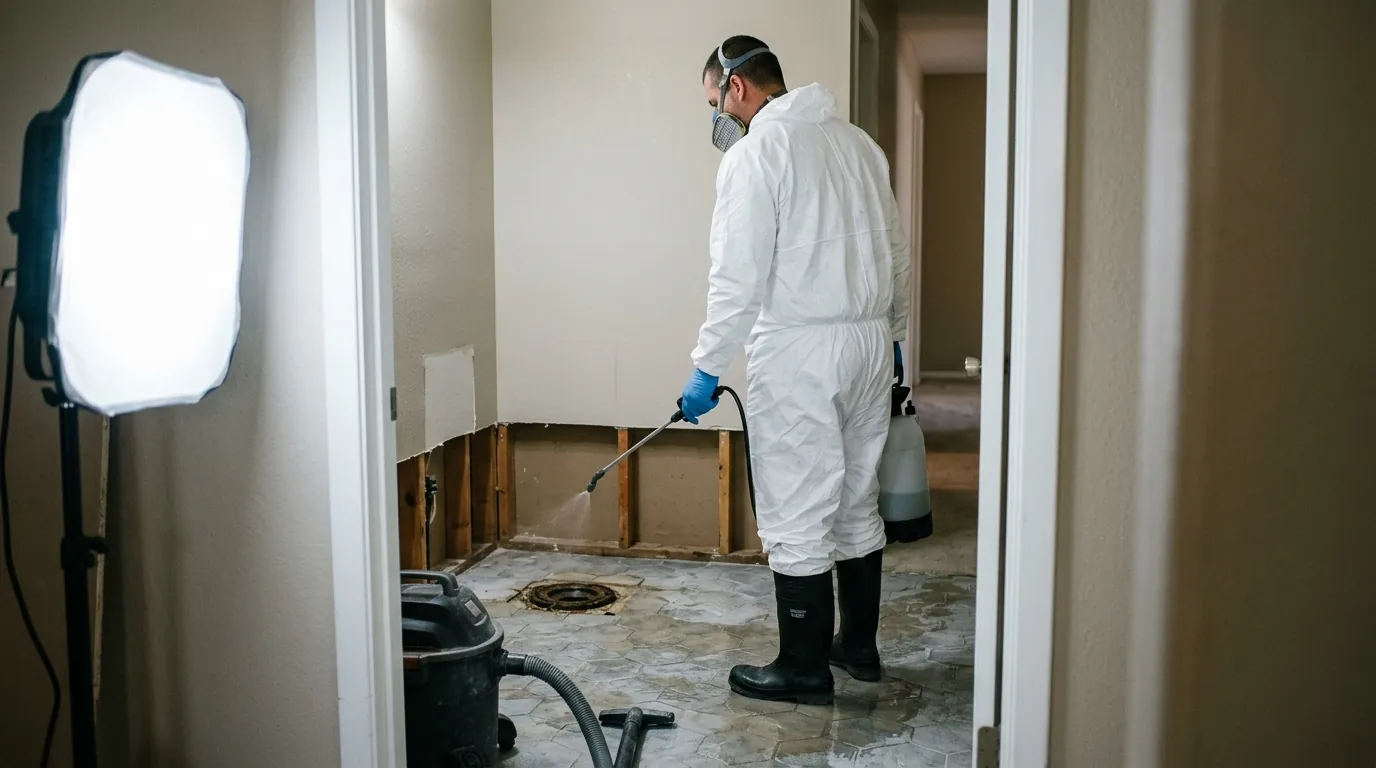
Sewage cleanup is not a mop-and-bleach job. Black water contains biological hazards that require full personal protective equipment, controlled containment, and EPA-registered hospital-grade disinfectants — not hardware-store cleaners. The work typically involves extracting standing sewage with truck-mounted or portable extraction units, removing and bagging any porous material that absorbed contamination (drywall, insulation, carpet, padding, hardwood subflooring in severe cases), and then applying enzymatic treatments and EPA-registered disinfectants to all affected structural surfaces before drying begins.
Timeline depends on how far the sewage traveled and how long it sat. A toilet overflow caught in under an hour in a tiled bathroom may be contained in a single day. A sewer line backup that migrated under flooring and into wall cavities before anyone noticed can require three to five days of remediation plus additional structural drying time. Moisture readings guide every decision — surfaces that look dry to the eye can still be harboring moisture levels that support bacterial and mold growth.
Our process
-
Containment and PPE staging. Before any extraction begins, the affected area is isolated with physical barriers and negative air pressure where needed to prevent aerosolized contaminants from spreading to unaffected rooms. Our technicians suit up in full PPE — respirators, Tyvek suits, gloves — before entering the loss zone.
-
Sewage extraction and gross contamination removal. Truck-mounted extraction removes standing sewage and contaminated water. Saturated porous materials — carpet, pad, drywall, insulation — are carefully removed, double-bagged, and disposed of per California biohazard waste guidelines. We photograph all removed materials for your insurance documentation before anything leaves the property.
-
Enzymatic treatment and EPA-registered disinfection. Once gross contamination is removed, all structural surfaces that contacted sewage are treated with enzymatic cleaners that break down organic matter at the molecular level, followed by application of EPA List N or hospital-grade disinfectants. This two-step process is what separates a sanitized surface from one that just looks clean.
-
Structural drying and moisture monitoring. After disinfection, commercial-grade air movers and dehumidifiers are deployed to dry structural cavities. Technicians take calibrated moisture readings at each visit — typically daily — and log them. Drying is not complete until readings return to acceptable dry standard for the material type, per the IICRC S500 framework.
-
Post-remediation verification. Before equipment is pulled, a final inspection confirms that all affected areas have reached dry standard and that no residual odor or contamination indicators remain. This documentation goes directly into your insurance claim file.
What separates a good sewage response from a bad one
The most common mistake is treating a sewage backup like a Category 1 clean-water loss. Technicians who skip containment, skip PPE, or apply bleach to porous materials without removing them first are creating a liability — not solving one. Bleach on drywall, for example, kills surface bacteria but does not penetrate to the depth where contamination has wicked. That wall will test positive on a post-remediation swab and the insurance adjuster will flag it.
A second common failure is stopping at the visible damage line. Sewage follows gravity and capillary action. It travels under floating floors, behind base cabinets, and into wall cavities through the smallest gaps. Experienced technicians use thermal imaging and calibrated moisture meters to map the actual contamination boundary — not the visible one.
Insurance adjusters on sewage claims look specifically for: photo documentation of all removed materials, a written scope that distinguishes Category 3 contamination from clean water damage, moisture logs with dates and readings, and disinfectant product labels or application records. Our IICRC-certified team produces this documentation as a standard part of every job, not as an afterthought.
Seasonal and regional considerations
In Bakersfield and the southern San Joaquin Valley, aging clay sewer laterals are common in neighborhoods built before the 1980s — areas like Oleander, Westchester, and parts of East Bakersfield. These lines are prone to root intrusion and collapse, particularly after the wet season when soil shifts. A heavy rain event that overwhelms the municipal system can push sewage backward through floor drains and low-lying fixtures in homes connected to older infrastructure. Knowing that pattern matters: if your backup happened during or after a significant rain, the source may be municipal surcharge rather than a private line failure — a distinction that affects both the plumbing repair and the insurance claim.
Service area
ProRestoration Services responds to sewage backup and septic overflow calls throughout Bakersfield and the surrounding communities, including Shafter, Wasco, Delano, McFarland, Arvin, Tehachapi, and Taft. The city-specific pages for each area link back here for the full technical detail on how this work gets done.
If sewage has backed up into your home or building, the window for limiting damage and remediation cost is short. Call ProRestoration Services at (661) 393-9306 — we’re available around the clock — and get a certified technician on-site to assess the contamination boundary, document the loss, and begin safe sewage removal before the damage spreads further.
Frequently Asked Questions
Is sewage backup always classified as Category 3, or does it depend on the source?
Which materials can be dried and saved after sewage contact, and which have to be removed?
What should I do — and not do — while waiting for the cleanup crew to arrive?
How do technicians confirm that a surface is actually sanitized after sewage cleanup, not just visually clean?
What's the difference between a sewer line backup and a septic system overflow, and does it change the cleanup approach?
Looking for the best sewage cleanup and sanitization company in Bakersfield?
ProRestoration Services provides licensed and insured sewage cleanup and sanitization in Bakersfield, CA and the surrounding area. We answer calls 24/7 — call (661) 393-9306 for immediate help.
Need Sewage Cleanup and Sanitization now?
We respond 24/7 across Bakersfield and surrounding CA cities.
Related Coverage
- Our Restoration Services
- Contact ProRestoration Services
- Sewage Cleanup and Sanitization in Arvin
- Sewage Cleanup and Sanitization in Bakersfield
- Sewage Cleanup and Sanitization in Delano
- Sewage Cleanup and Sanitization in Lake Isabella
- Sewage Cleanup and Sanitization in Lamont
- Sewage Cleanup and Sanitization in Oildale
- Sewage Cleanup and Sanitization in Rosedale
- Sewage Cleanup and Sanitization in Shafter
- Sewage Cleanup and Sanitization in Taft
- Sewage Cleanup and Sanitization in Tehachapi
- Sewage Cleanup and Sanitization in Wasco