Odor Removal and Deodorization in Lake Isabella
24/7 odor removal and deodorization in Lake Isabella, CA. IICRC-certified, insurance billing accepted. Call (661) 393-9306.
Our IICRC-certified technicians are dispatched from our Bakersfield, CA headquarters and are typically on-site in Lake Isabella within 60 minutes of your call.
When wildfire smoke rolls through the Highway 178 canyon or a burst pipe in an unoccupied cabin has been seeping for a week before anyone notices, the odors left behind are a different animal than a kitchen grease fire in a newer suburban home. In the Kern River Valley, the combination of older wood-frame and manufactured housing, extreme temperature swings, and the lingering shadow of events like the 2016 Erskine Fire means odors penetrate deeper, set faster, and resist the consumer-grade sprays that might mask a problem elsewhere. ProRestoration Services handles professional odor removal and deodorization in Lake Isabella and the surrounding valley — call (661) 393-9306 any time.
Why Lake Isabella Properties Face Stubborn Odor Problems
The valley’s housing stock tells most of the story. Seasonal cabins around Lake Isabella proper and older manufactured homes in Mountain Mesa were built with materials — tongue-and-groove pine paneling, particleboard subfloors, fiberglass batt insulation — that act like sponges for smoke compounds and microbial off-gassing. When a property sits vacant through a cold winter and a pipe lets go, the water runs for days. By the time an owner drives up from Bakersfield, mold colonies are already producing musty volatile organic compounds that have wicked into wall cavities and flooring adhesives.
Wildfire smoke is the valley’s other defining odor source. The 2016 Erskine Fire destroyed roughly 280 homes in this area, and even properties that survived absorbed months of ambient smoke. Polycyclic aromatic hydrocarbons from burning vegetation and structural materials bond chemically to porous surfaces — they don’t simply air out. Homes near Erskine Creek and along the lower reservoir roads that took on smoke infiltration years ago sometimes still carry detectable odor in enclosed spaces, particularly after the house heats up in summer.
Our Odor Removal and Deodorization Process in Lake Isabella
Effective deodorization is a sequence, not a single treatment. The process starts with a thorough source assessment — locating and removing any residual contaminated material that is still off-gassing, whether that’s charred framing, wet insulation, or decomposing organic matter. Spraying a deodorant over an active source just delays the problem.
Once the source is addressed, we match the treatment technology to the odor type and the structure:
- Thermal fogging disperses a deodorizing solvent as a fine fog that penetrates the same pathways smoke traveled — into wall voids, under flooring, inside cabinet interiors. It’s particularly effective in the older wood-construction cabins common around South Lake, where smoke has followed natural draft paths through gaps in the building envelope.
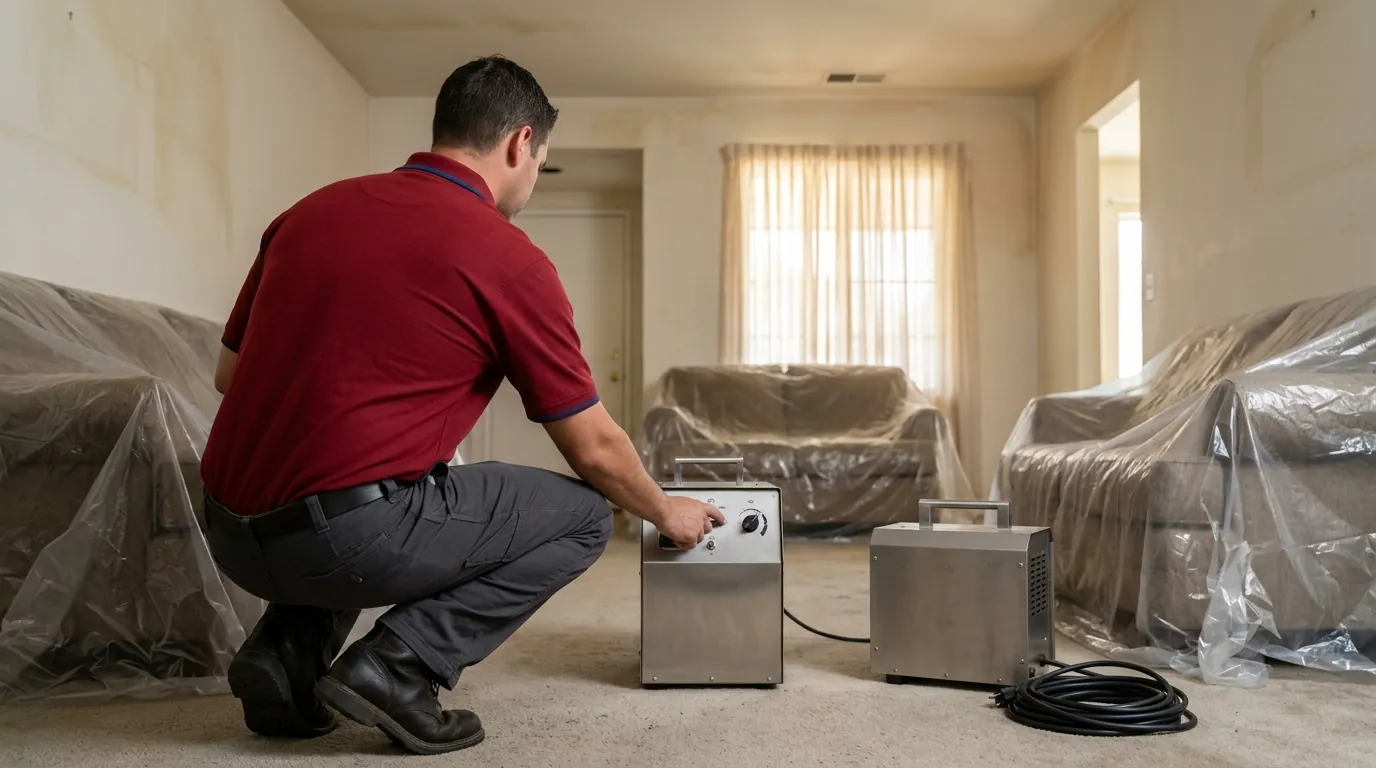
- Hydroxyl deodorization uses UV-generated hydroxyl radicals to break down odor molecules at a chemical level. Because hydroxyl generators are safe to run in occupied or partially occupied spaces, they’re useful when a property needs to remain accessible during treatment — relevant for the valley’s short-term rental cabins where owners want to minimize downtime.
- Ozone treatment is reserved for unoccupied structures with severe, set-in odors. High-concentration ozone oxidizes odor compounds in porous materials effectively, but the space must be fully vacated and properly ventilated afterward — a step we document carefully per California contractor standards under CSLB license #960566.
After treatment, we verify results with calibrated odor meters rather than relying on a technician’s nose, which desensitizes quickly in heavy-odor environments.
Reaching Lake Isabella from Bakersfield
ProRestoration Services is based in Bakersfield and dispatches 24/7. The drive up Highway 178 through the canyon runs roughly an hour under normal conditions — longer in winter when ice or rockfall delays traffic through the narrows. We account for that travel window when coordinating with property owners, and we carry a fully stocked service vehicle so a second trip for equipment isn’t necessary. For properties in Bodfish or the South Lake area on the western end of the reservoir, access from the Highway 178 corridor is straightforward; Mountain Mesa addresses on the north side sometimes require routing through Lake Isabella proper depending on road conditions.
Because few restoration contractors maintain a valley presence, response to 93240 and 93283 ZIP code addresses often falls to Bakersfield-based firms. We’re familiar with that drive and build it into our scheduling rather than treating valley calls as an afterthought.
Local Note: Seasonal Vacancy and the Odor Clock
Something that comes up repeatedly in the Kern River Valley: seasonal property owners often don’t realize how quickly odor problems compound in a closed-up structure. A cabin near the Isabella Dam recreation corridor that sits sealed from October through April traps humidity from winter condensation, and any minor moisture intrusion — a slow roof leak, a failed toilet wax ring — will produce detectable mold odor within days at the temperatures common here in early spring. By the time the owner opens the property for the season, the smell has had months to penetrate wood surfaces. The practical implication is that treatment timelines for valley properties are often longer than comparable jobs in Bakersfield, and owners should plan for two to three days of active treatment rather than a single-day turnaround.
If you own a seasonal property in the valley, a brief pre-season inspection call — before you commit to summer rental bookings — can catch a developing odor problem while it’s still straightforward to treat.
If your Lake Isabella property is carrying smoke, mold, or water-damage odor that hasn’t responded to anything you’ve tried, call ProRestoration Services at (661) 393-9306. We’ll assess the source, explain the treatment options honestly, and give you a realistic timeline before any work begins.
Odor Removal and Deodorization in Lake Isabella: Service Coverage
Frequently Asked Questions
How fast can you arrive for odor removal and deodorization in Lake Isabella?
Can you reach a property in the South Lake or Bodfish area the same day I call?
My Mountain Mesa cabin absorbed smoke from the 2016 Erskine Fire area and still smells when it heats up in summer. Is that treatable years later?
A burst pipe ran undetected for about a week in my Lake Isabella proper vacation home. Will the musty smell go away on its own once it dries out?
What's the difference between ozone treatment and hydroxyl deodorization, and which one is right for my property?
Does homeowner's insurance typically cover professional odor removal for wildfire smoke or water damage in the 93240 area?
Odor Removal and Deodorization response in Lake Isabella
Most Lake Isabella calls see a technician on-site within 60 minutes from our Bakersfield headquarters.