Storm Damage Restoration in Bakersfield
24/7 storm damage restoration in Bakersfield and surrounding areas. IICRC-certified, insurance billing accepted. Call (661) 393-9306.
A storm moves through Bakersfield in the early hours, and by morning you’re standing in your living room looking at a ceiling bowed with trapped rainwater, a tree limb punching through your roof deck, and insulation hanging where drywall used to be. The damage is obvious in some places and invisible in others — and the invisible parts are what cause the most expensive problems down the road. Storm damage restoration is not just debris removal and a tarp. It’s a structured process of uncovering what the wind, water, and impact actually did to your structure before any repairs begin.
What Storm Damage Restoration actually involves
Storm events layer multiple damage types on top of each other in ways that a single trade — a roofer, a general contractor — isn’t equipped to untangle alone. A tree impact, for example, simultaneously creates a breach in the roof envelope, drives moisture into the wall cavity and attic insulation, and can shift framing members enough to misalign doors and windows. Wind-driven rain infiltrates through gaps that were never designed to handle lateral water pressure, soaking wall assemblies that look dry from the inside for days before the moisture migrates to a visible surface.
Restoration work here involves emergency stabilization (tarping, board-up, temporary fencing), moisture mapping of the entire affected envelope with thermal imaging and pin-type moisture meters, controlled drying of any water-saturated assemblies before reconstruction begins, debris removal and documentation, and finally the rebuild itself. The sequence matters — rebuilding over wet framing or insulation is how mold colonies establish within 24 to 48 hours of a storm event.
Our process
-
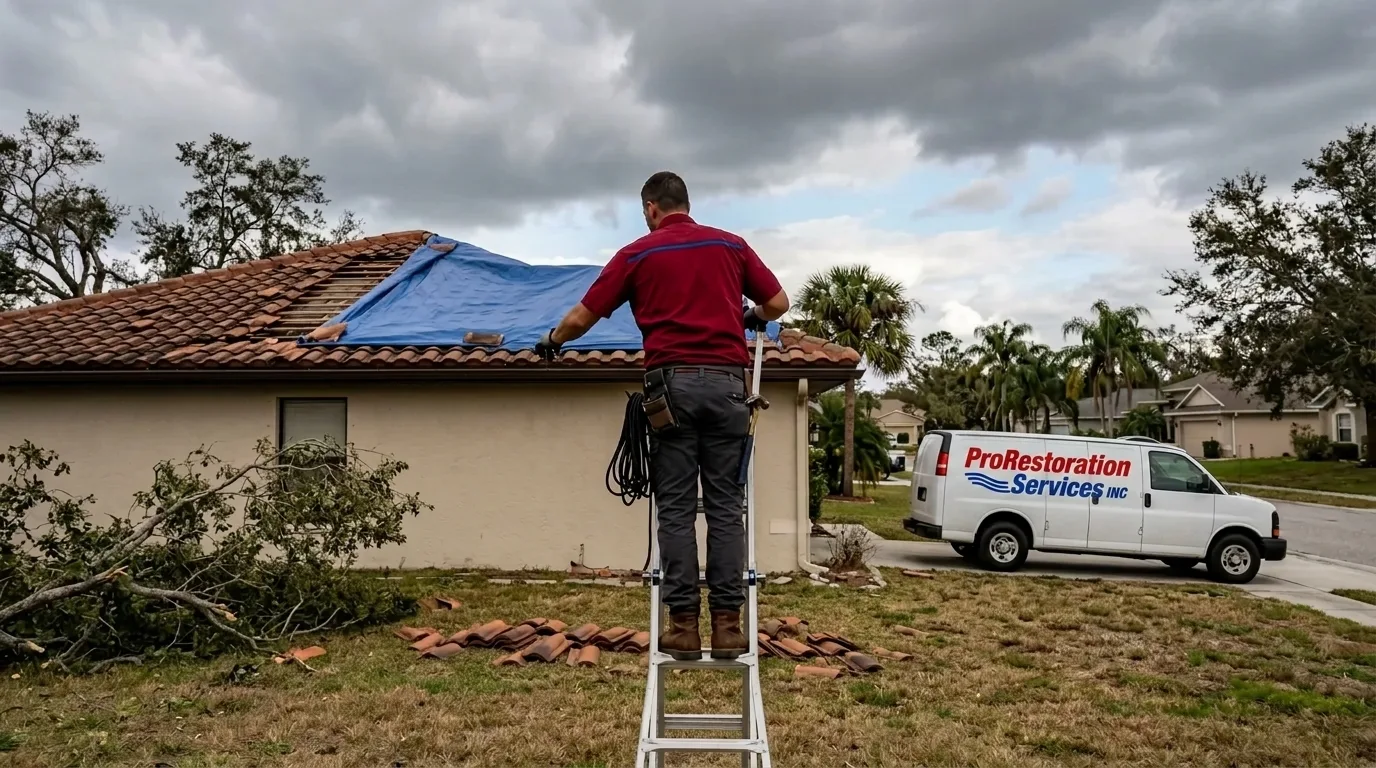
Emergency stabilization and site security. The first priority after a storm is stopping additional damage. That means getting a reinforced poly tarp over any roof breach, boarding compromised windows and doors, and — for large tree impacts — assessing whether the structure is safe to enter at all. We’re available around the clock because storm damage doesn’t wait for business hours.
-
Systematic damage documentation. Before a single piece of debris is moved, we photograph and document the loss in the format insurance adjusters expect: room-by-room photo sets, moisture readings logged by location, and a written scope that distinguishes storm-caused damage from pre-existing conditions. This documentation is what protects your claim.
-
Moisture mapping and extraction. Wind-driven rain infiltrates differently than a plumbing leak — it tends to saturate wall cavities and roof assemblies unevenly. We use thermal imaging cameras and calibrated moisture meters to trace the water’s path, then extract standing water and set drying equipment (commercial-grade desiccant or refrigerant dehumidifiers, high-velocity air movers) targeted to the specific wet zones rather than blanketing the whole space.
-
Debris removal and structural assessment. Tree limbs, roofing materials, and broken glass are removed and disposed of properly. A structural assessment follows — we’re looking at whether roof sheathing, rafters, wall framing, or load-bearing elements have been compromised beyond cosmetic damage. This step determines whether reconstruction is a straightforward finish-out or requires a licensed contractor and permits.
-
Reconstruction and final inspection. Once the structure is dry and structurally sound, reconstruction begins: sheathing, roofing, insulation, drywall, and finishes. We carry license #960566 and coordinate directly with your insurance carrier through the repair phase, so you’re not managing two separate conversations.
What separates a good storm damage response from a bad one
The most common mistake in storm cleanup is treating it like a construction project from day one — skipping the drying phase because the framing “looks fine” or the homeowner wants the roof closed up fast. Wet lumber that gets sealed behind new sheathing and roofing creates a near-perfect environment for mold: dark, humid, and undisturbed. By the time it’s visible on the ceiling below, the remediation cost has multiplied.
A second failure point is incomplete documentation. Insurance adjusters are trained to separate storm-caused damage from wear-and-tear or deferred maintenance. Operators who don’t photograph moisture readings, don’t note the direction of water infiltration, and don’t distinguish fresh wood splits from weathered ones leave homeowners with underpaid claims. Good documentation at the emergency response stage is worth more than any amount of negotiating later.
Finally, watch for contractors who skip the moisture mapping step entirely and go straight to demo and rebuild. Thermal imaging and moisture meters aren’t optional — they’re how you find the water that migrated six feet from the impact point and soaked into a wall assembly that shows no visible staining yet.
Seasonal and regional considerations
Bakersfield sits in the southern San Joaquin Valley, where the storm threat profile is different from coastal California. The primary risks here are atmospheric river events in winter and early spring — storms that can drop several inches of rain in 24 hours on soil that’s been dry for months and can’t absorb it quickly. Flat or low-slope roofs common in Kern County commercial buildings are especially vulnerable to ponding and seam failure under those conditions. Summer brings occasional high-wind events and dust storms that drive fine particulate into building envelopes and HVAC systems. Hail, while less frequent than in the Great Plains, does occur and tends to damage roof membranes in ways that aren’t visible until the next rain event reveals a leak.
Service area
ProRestoration Services responds to storm damage throughout Bakersfield and the surrounding communities, including Shafter, Wasco, Delano, Tehachapi, Arvin, and the broader Kern County region. City-specific service pages cover local considerations in more detail — this page outlines the core process that applies wherever the storm hit.
If a storm has left your property exposed, the window for preventing secondary water damage and mold is short. Call (661) 393-9306 to get a crew dispatched and begin your storm damage assessment today.
Frequently Asked Questions
My roof was breached during the storm but the interior looks dry. Do I still need moisture testing?
A tree fell on my house. How do I know whether it's safe to stay inside while repairs are made?
What does storm damage documentation need to include for an insurance claim?
How long does structural drying typically take after storm-related water infiltration?
Can storm damage to a roof cause problems that don't show up until months later?
Looking for the best storm damage restoration company in Bakersfield?
ProRestoration Services provides licensed and insured storm damage restoration in Bakersfield, CA and the surrounding area. We answer calls 24/7 — call (661) 393-9306 for immediate help.
Need Storm Damage Restoration now?
We respond 24/7 across Bakersfield and surrounding CA cities.
Related Coverage
- Our Restoration Services
- Contact ProRestoration Services
- Storm Damage Restoration in Arvin
- Storm Damage Restoration in Bakersfield
- Storm Damage Restoration in Delano
- Storm Damage Restoration in Lake Isabella
- Storm Damage Restoration in Lamont
- Storm Damage Restoration in Oildale
- Storm Damage Restoration in Rosedale
- Storm Damage Restoration in Shafter
- Storm Damage Restoration in Taft
- Storm Damage Restoration in Tehachapi
- Storm Damage Restoration in Wasco
- Storm Damage Insurance Claim Checklist (Use This Before You Call Your Insurer)