
Soot Removal in Tehachapi
24/7 soot removal in Tehachapi, CA. IICRC-certified, insurance billing accepted. Call (661) 393-9306.
Our IICRC-certified technicians are dispatched from our Bakersfield, CA headquarters and are typically on-site in Tehachapi within 60 minutes of your call.
Wood stoves are a practical necessity in Tehachapi’s 4,000-foot winters, but a chimney fire or a stove that backdrafts on a windy night near the Tehachapi Pass can coat a home’s interior in layers of oily, acidic soot within minutes. That residue doesn’t just look bad — it etches painted surfaces, discolors grout, and embeds itself into porous materials like drywall texture and ceiling popcorn. The longer it sits, the deeper it bonds. ProRestoration Services responds 24/7 from Bakersfield, and our IICRC Certified team brings the chemistry and equipment to pull soot out of surfaces before permanent staining sets in.
Why Tehachapi Properties See Soot Damage Differently
Tehachapi isn’t a typical Southern California fire-loss market. The combination of genuine mountain winters, widespread wood-stove and pellet-stove heating, and proximity to wildfire-prone surrounding ranges creates a soot cleanup demand that looks different from what crews encounter in the valley below.
Chimney and flue fires are the most common source. Many homes in Golden Hills and Bear Valley Springs were built in the 1970s and 1980s with masonry fireplaces that haven’t been relined since original construction. Creosote accumulates in aging flues, and a single high-burn evening can ignite it. The resulting fire pushes dense, tar-heavy smoke back through the firebox and into living spaces before the homeowner realizes what’s happening.
Wildfire smoke events add a separate category. When fire activity in the surrounding Tehachapi Mountains or Antelope Valley pushes smoke into the 93561 ZIP code for days at a stretch, homes with older window seals and attic venting accumulate fine ash and smoke odor that requires professional extraction — not just airing out.
Vacation and part-time properties in Bear Valley Springs and Stallion Springs present a timing problem. A chimney fire or smoke event in a cabin that sits empty for two or three weeks means soot has had time to fully oxidize and bond to surfaces. By the time the owner arrives and calls for help, what might have been a straightforward surface clean has become a deeper restoration job.
Our Soot Removal Process in Tehachapi
Soot is not uniform. Protein residue from a kitchen fire behaves differently than the wet, sticky smoke residue from a chimney fire, which behaves differently still from the fine dry ash that infiltrates a home during a wildfire smoke event. Matching the cleaning chemistry to the residue type is the first decision our technicians make on arrival.
The process typically runs in this sequence:
Containment and air scrubbing. Before any surface work begins, we establish containment to prevent loose soot particles from migrating to unaffected rooms, and we run HEPA air scrubbers to begin pulling airborne particulates from the space.
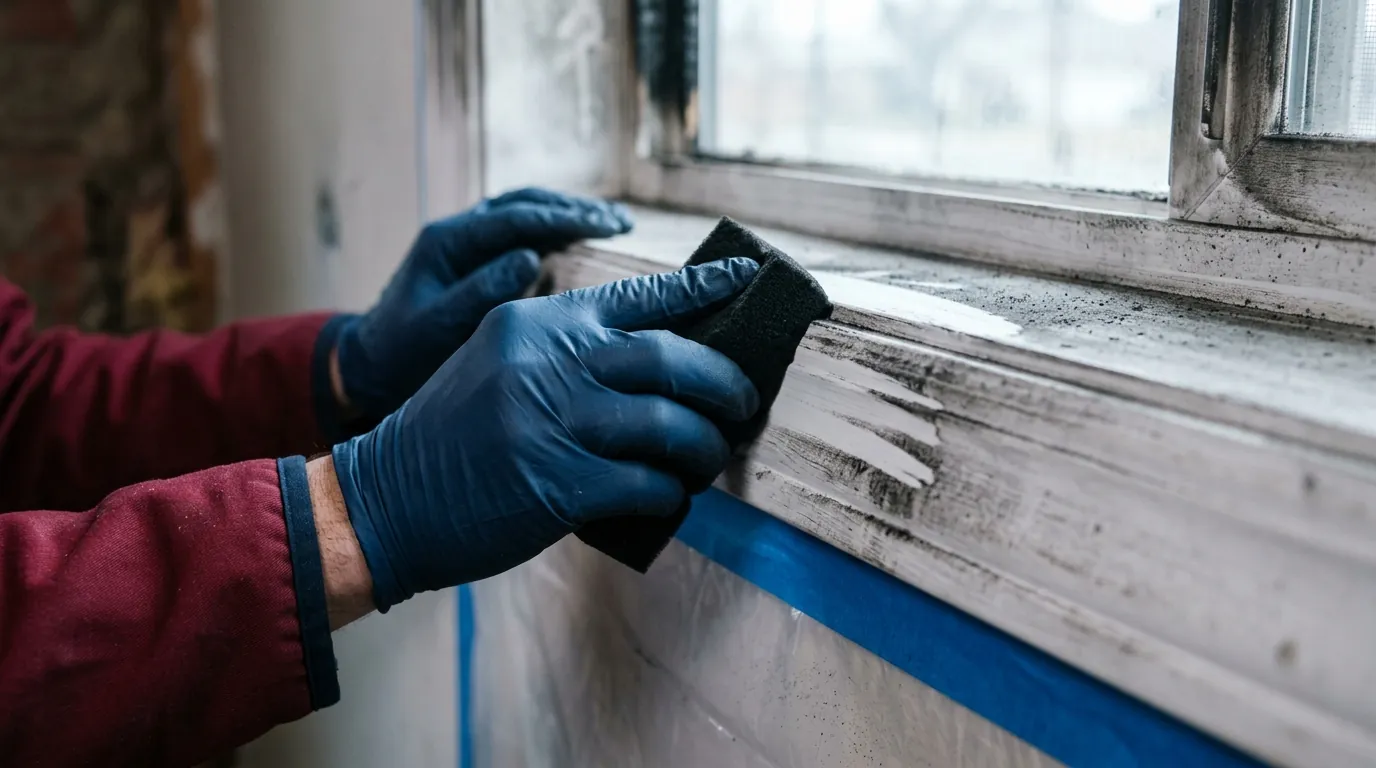
Dry soot removal. Loose, dry soot — common in wildfire-smoke infiltration events — is removed first with dry chemical sponges and HEPA-filtered vacuums. Wiping before dry removal smears the residue and drives it deeper into porous surfaces.
Chemical cleaning. Oily, tar-heavy chimney soot requires alkaline cleaning agents applied with controlled dwell time. We adjust concentration based on surface type — flat latex paint on drywall tolerates different chemistry than the knotty pine paneling common in older Tehachapi mountain cabins.
Odor neutralization. Soot carries a persistent odor that survives surface cleaning if the underlying cause isn’t addressed. We use thermal fogging or hydroxyl generation depending on the space and occupancy status to neutralize odor molecules rather than mask them.
Documentation. Every affected surface is photographed before and after, with notes on cleaning method and product used — documentation your insurance adjuster will need.
Reaching Tehachapi from Bakersfield
Our crews travel Highway 58 east from Bakersfield into Tehachapi regularly. Because we operate 24/7, a call at 2 a.m. after a chimney fire doesn’t wait until morning. Downtown Tehachapi, Golden Hills, and properties along the Highway 202 corridor are our most frequent service areas in Kern County’s mountain communities, and we’re familiar with the access roads into the more rural subdivisions east of town.
For properties in Stallion Springs or the more remote sections of Bear Valley Springs, we ask callers to confirm gate codes or road conditions during winter months — snow and ice on the access roads can affect equipment staging, and a quick conversation on arrival logistics saves time when every hour of soot exposure matters.
Tehachapi Insurance Coordination
Most homeowner policies cover sudden and accidental fire and smoke damage, including chimney fires and wildfire-smoke infiltration events. We document the loss in the format adjusters expect — scope of affected areas, surface-by-surface condition notes, photos, and a line-item estimate — and we bill carriers directly when the policy allows it. If you’re unsure whether your event qualifies as a covered loss, call us before you call your agent; we can help you frame the claim accurately from the start.
For part-time residents in Bear Valley Springs or Stallion Springs with seasonal or secondary-home policies, coverage terms can differ from standard homeowner policies. We’ve worked with a range of carriers on mountain-community claims and can flag anything unusual in your documentation before submission.
Local Note
One thing crews learn quickly working in Tehachapi’s older mountain cabins: the knotty pine and cedar tongue-and-groove paneling that lines the walls and ceilings of many 1960s and 1970s properties near Alpine Forest absorbs smoke odor at a different rate than painted drywall. The natural oils in the wood initially slow penetration, but once soot works past the surface grain, odor can re-volatilize for weeks — especially when the heat comes on in the morning. Standard surface cleaning alone won’t resolve it. Thermal fogging after the surface clean, with the HVAC running, is the step that actually locks the result in on those properties.
If you’re dealing with soot damage anywhere in the Tehachapi area — whether it’s a chimney fire in Golden Hills, smoke infiltration from a wildfire event, or a stove that backed up during a windstorm — call ProRestoration Services at (661) 393-9306. We’ll assess the damage, explain what the cleaning process looks like for your specific surfaces, and get work started before the residue has more time to set.
Soot Removal in Tehachapi: Service Coverage
Frequently Asked Questions
How fast can you arrive for soot removal in Tehachapi?
Can you reach a property in Bear Valley Springs or Stallion Springs for a soot emergency overnight?
Is chimney-fire soot in a Tehachapi wood-stove home harder to clean than smoke damage from other fire types?
My cabin in the 93561 area sat empty for several weeks after a chimney fire. Is the soot still treatable?
Does wildfire smoke infiltration in Tehachapi qualify as a covered insurance loss?
The walls in my older Golden Hills home have a textured finish. Will soot cleaning damage it?
Soot Removal response in Tehachapi
Most Tehachapi calls see a technician on-site within 60 minutes from our Bakersfield headquarters.