Soot Removal in Lake Isabella
24/7 soot removal in Lake Isabella, CA. IICRC-certified, insurance billing accepted. Call (661) 393-9306.
Our IICRC-certified technicians are dispatched from our Bakersfield, CA headquarters and are typically on-site in Lake Isabella within 60 minutes of your call.
When a fire tears through a cabin off Highway 178 or a manufactured home in Mountain Mesa, the flames themselves are only part of the story. Soot — that oily, acidic residue left behind by incomplete combustion — keeps damaging surfaces long after the fire is out. In the Kern River Valley, where wildfire smoke can settle into a structure for days before a crew can safely access it, that window matters. Every hour soot sits on wood paneling, drywall, or insulation, it etches deeper and bonds harder. Calling (661) 393-9306 puts a certified crew in motion toward Lake Isabella without delay.
Why Lake Isabella Properties See Soot Damage Differently
The 2016 Erskine Fire didn’t just destroy roughly 280 homes in this valley — it reshaped how residents think about fire risk entirely. But even smaller structure fires and chimney fires produce soot patterns that are unusually difficult to clean here, for a few reasons specific to the area.
First, the housing stock. A significant share of homes in Lake Isabella proper, Bodfish, and South Lake are older cabins, manufactured homes, or wood-framed structures with unfinished interior surfaces — exposed beams, tongue-and-groove pine paneling, and unpainted drywall in utility areas. Porous, unsealed wood is among the hardest materials to decontaminate after a soot event. Dry-sponge passes alone won’t cut it; the residue has penetrated the grain.
Second, the climate creates a compounding problem. Kern River Valley winters are colder than most Californians expect — overnight lows regularly drop below freezing, and many seasonal properties sit unoccupied for weeks at a time. A chimney fire or electrical fire in a vacant cabin can smolder and generate soot for an extended period before anyone notices. By the time a neighbor calls it in, the entire interior may be coated in a layer of smoke residue that has already begun off-gassing and corroding metal fixtures.
Third, the valley’s remoteness means fire suppression response times are longer than in urban areas. Structures often sustain more fire contact before suppression, which means heavier, more complex soot deposits by the time a restoration crew arrives.
Our Soot Removal Process in Lake Isabella
Soot isn’t one substance — it’s a spectrum. Protein soot from kitchen fires, wet smoke residue from slow-burning fires, and dry smoke from fast-flaming fires each require different cleaning chemistry and technique. Before any cleaning begins, the crew does a full scope: identifying soot type, mapping affected surfaces, and flagging materials that need containment or removal rather than cleaning.
For the wood-heavy interiors common in Lake Isabella cabins, the process typically involves:
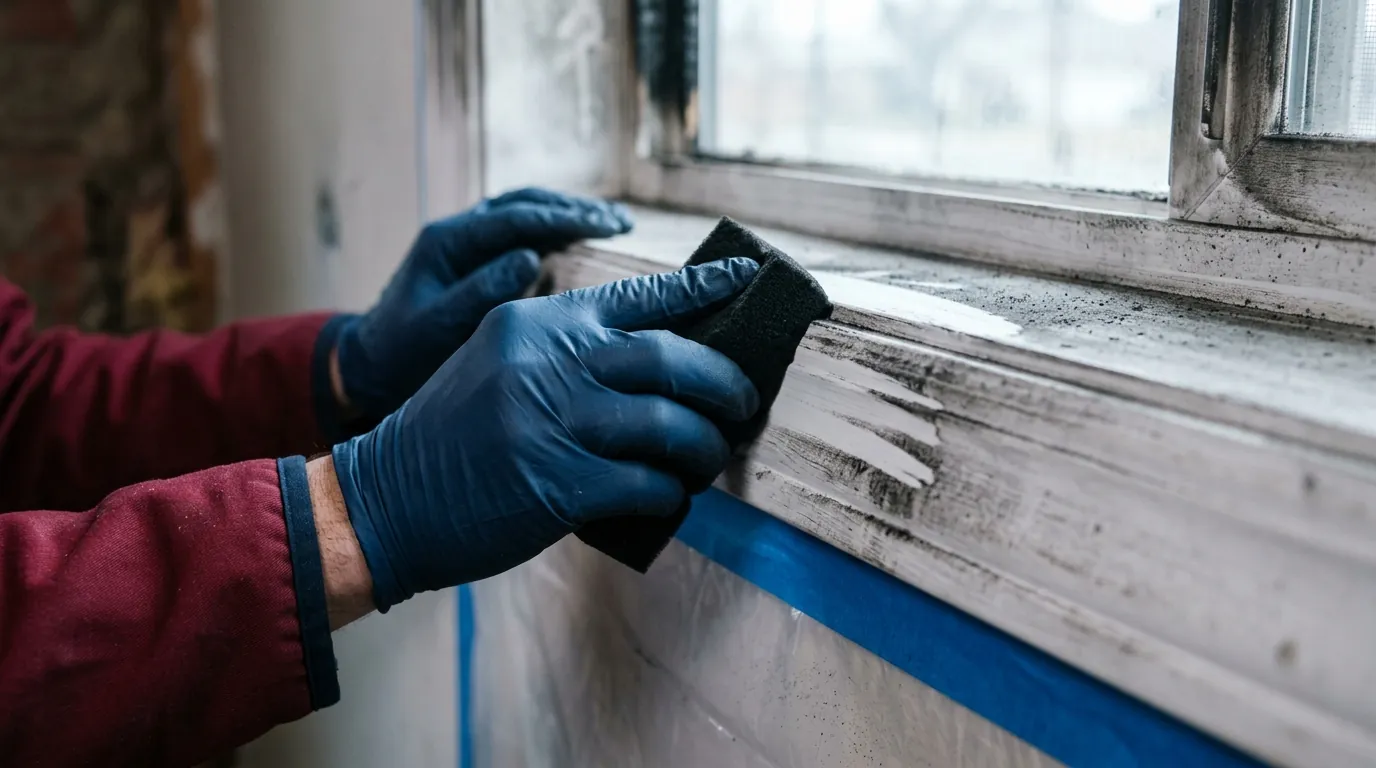
- Dry chemical sponge passes on ceilings and upper walls to lift loose carbon without smearing it deeper into the substrate
- Alkaline or pH-neutral cleaning agents applied to wood surfaces, calibrated to the soot type — acidic soot residue on pine paneling requires a different approach than oily smoke on painted drywall
- HEPA-filtered vacuuming of HVAC registers, crawl spaces, and attic vents, which act as collection points for airborne soot particles
- Odor treatment using thermal fogging or hydroxyl generation to neutralize smoke odor that has embedded in insulation, subfloor materials, and wall cavities
- Documentation at every stage — photographs, moisture readings, and written logs that support your insurance claim
The team carries EPA Lead-Safe Certified Firm credentials, which matters in older Lake Isabella structures where lead-based paint may be disturbed during cleaning or partial demolition of heavily damaged materials.
Reaching Lake Isabella from Bakersfield
ProRestoration Services is headquartered in Bakersfield and operates 24/7. The drive up Highway 178 through the canyon runs roughly an hour under normal conditions — longer in winter when the canyon road sees ice or rock debris, and longer still during peak summer traffic when the reservoir draws visitors from across Kern County. For properties in the 93240 ZIP code, the crew stages out of the same route regardless of whether the job is in Bodfish, South Lake, or closer to Isabella Dam.
Because no restoration contractor is based in the valley itself, response time is a real consideration. Calling as soon as the fire department clears the structure — even if it’s the middle of the night — starts the clock earlier and limits how deeply soot bonds to your surfaces before cleaning begins.
Lake Isabella Insurance Coordination for Soot Claims
Post-fire soot claims in California are handled under the dwelling coverage portion of a homeowner’s policy, but the documentation requirements can be detailed. Insurers want itemized scope reports, pre-cleaning photographs, and material assessments that distinguish cleanable surfaces from those requiring replacement. ProRestoration Services produces that documentation as a standard part of every job — not as an add-on.
For properties that sustained damage in a wildfire event, the process may also involve coordination with the California Department of Insurance’s wildfire claim protocols, which have specific timelines and dispute-resolution provisions. The crew can walk you through what to expect and what your adjuster will likely request.
Local Note
One pattern that shows up repeatedly in Kern River Valley soot jobs: older cabins in the area were often built with unvented or poorly vented crawl spaces, and smoke from a structure fire migrates downward through floor gaps and collects in those spaces. Homeowners and even some adjusters overlook the crawl space entirely, then wonder why smoke odor returns weeks after the main living areas were cleaned. Any thorough soot remediation in this valley should include a crawl space inspection — it’s not optional on a wood-framed cabin with a dirt or gravel subfloor.
If you’re dealing with soot damage anywhere in the Lake Isabella area — whether it’s a single smoke-stained room or a full post-fire cleanup — call ProRestoration Services at (661) 393-9306. The crew is available around the clock, and the sooner cleaning starts, the more of your structure and contents can be saved.
Soot Removal in Lake Isabella: Service Coverage
Frequently Asked Questions
How fast can you arrive for soot removal in Lake Isabella?
How quickly can ProRestoration Services reach Lake Isabella or Bodfish after a fire?
Are the older cabins and manufactured homes common in Mountain Mesa and South Lake harder to clean after a soot event?
My cabin near Erskine Creek sat closed for several weeks after a chimney fire — does the delay make soot removal more difficult?
Will my homeowner's insurance cover soot removal in the 93240 ZIP code, and what documentation do I need?
Does the EPA Lead-Safe certification matter for soot cleanup in older Lake Isabella homes?
Soot Removal response in Lake Isabella
Most Lake Isabella calls see a technician on-site within 60 minutes from our Bakersfield headquarters.