Soot Removal in Delano
24/7 soot removal in Delano, CA. IICRC-certified, insurance billing accepted. Call (661) 393-9306.
Our IICRC-certified technicians are dispatched from our Bakersfield, CA headquarters and are typically on-site in Delano within 60 minutes of your call.
Kitchen fires in Delano’s older Downtown bungalows don’t just leave charred cabinets — they leave behind a thin, oily soot film that migrates through the entire house within hours, coating walls, ceilings, and the inside of HVAC ducts before most homeowners even realize the smoke has traveled that far. In the San Joaquin Valley’s dry heat, that residue bakes onto porous surfaces fast, and the longer it sits, the deeper it etches into drywall, plaster, and wood trim. ProRestoration Services responds 24/7 and can be reached at (661) 393-9306.
Why Delano Properties See Soot Damage Differently
Delano sits in the heart of Kern County’s agricultural corridor, and the housing stock reflects that history. The blocks radiating out from the Randolph Street corridor and the older sections of Downtown Delano are lined with pre-1960 wood-frame bungalows — many with original lath-and-plaster walls, uninsulated attic cavities, and open-return HVAC systems that were never designed to contain smoke migration. When a kitchen fire or appliance malfunction produces soot in one of these homes, the particulate doesn’t stay in the room of origin. It moves through gaps in the plaster, up into the attic, and gets pulled through the return air pathway, depositing a fine gray-black layer across rooms that never saw a flame.
On the west side of town, the 2000s-era subdivisions tell a different story. These homes have tighter construction, but they also have more synthetic materials — laminate flooring, composite cabinetry, foam insulation — that produce a particularly sticky, protein-rich soot when they burn. That type of residue requires different chemistry than the dry carbon soot from a wood or paper fire, and using the wrong cleaning agent can permanently smear it into painted drywall rather than lifting it.
Along the Highway 99 commercial strip, ag-processing and cold-storage facilities present their own soot challenges after equipment fires. The combination of industrial grease, refrigerant residue, and high-volume ventilation systems means commercial soot jobs here often involve ductwork decontamination at a scale that residential equipment can’t handle alone.
Our Soot Removal Process in Delano
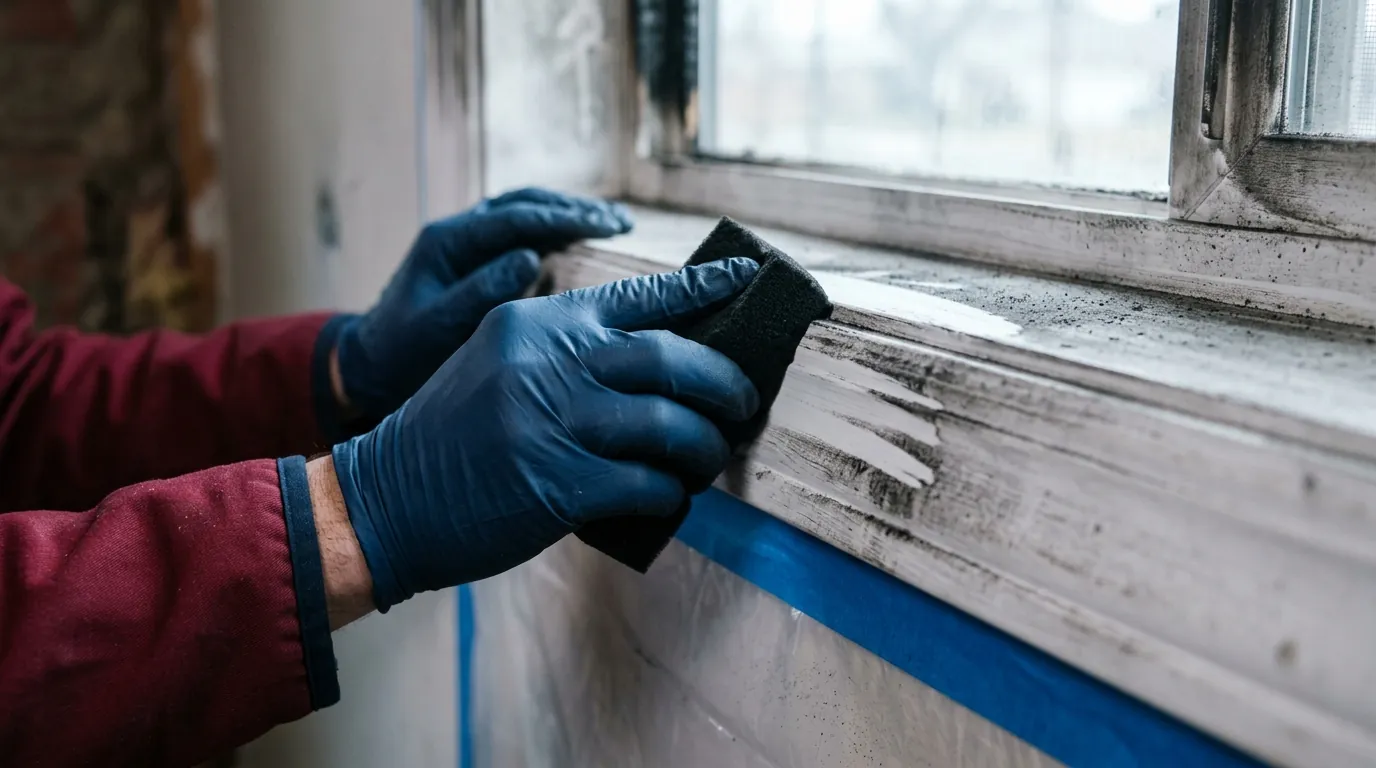
Every job starts with a room-by-room soot mapping — we use a dry chemical sponge test on walls and ceilings to identify the migration path before touching anything. In Delano’s older plaster-wall homes, this step matters more than most people expect: plaster is alkaline and reacts differently to acidic soot residue than modern drywall does, so the cleaning chemistry has to be matched to the substrate, not just the soot type.
Once the scope is mapped, the process moves in a defined sequence:
- Dry removal first — dry sponging and HEPA vacuuming to lift loose carbon particles before any wet cleaning introduces moisture that could drive residue deeper into porous surfaces.
- Surface-specific wet cleaning — alkaline cleaners for protein soot (common in kitchen fires), dry-cleaning solvents for oily petroleum-based residue, and pH-neutral solutions for painted plaster walls where aggressive chemistry would lift the finish.
- Odor neutralization — thermal fogging or hydroxyl generation to break down odor-causing volatile organic compounds embedded in wall cavities and soft furnishings. In Delano’s summer heat, VOCs off-gas faster, which means odor treatment can’t be skipped even on what looks like a minor smoke event.
- HVAC and duct inspection — soot in the duct system is the most common reason a “cleaned” home still smells like smoke weeks later. We inspect and, where indicated, clean supply and return ducts before the system is turned back on.
- Post-cleaning verification — visual inspection and, when indicated, air quality sampling to confirm particulate levels are within acceptable ranges before the space is reoccupied.
Reaching Delano from Bakersfield
ProRestoration Services is based in Bakersfield and dispatches north on Highway 99 to reach Delano around the clock. Delano is genuinely underserved by local restoration contractors — most of Kern County’s restoration capacity is concentrated in Bakersfield, which means response time is a real differentiator for 93215 and 93216 addresses. We prioritize Delano calls and keep the route staffed for emergency response. Whether the job is a residential kitchen fire near Cesar Chavez Park or a commercial smoke event in a warehouse off the Highway 99 corridor, the crew arrives with a fully stocked service vehicle — no second trip back to the shop for supplies.
Local Note
One thing that catches out-of-area contractors working in Delano’s older downtown neighborhoods: the interior walls in many pre-1960 bungalows near the Cecil Avenue corridor were finished with a lime-based plaster that is significantly more absorbent than the gypsum plaster used in later construction. Aggressive wet cleaning with high-alkaline solutions — standard practice on modern drywall — can cause lime plaster to soften, bubble, and separate from the lath underneath. We adjust cleaning protocols specifically for these walls, using lower-moisture application methods and pH-matched chemistry. It takes longer, but it’s the difference between a cleaned wall and a wall that needs to be replastered after the soot job.
If you’re dealing with soot residue anywhere in Delano — from a small kitchen fire to a structure that took significant smoke damage — call ProRestoration Services at (661) 393-9306. We’ll assess the damage, walk you through the scope, and get the work started the same day.
Soot Removal in Delano: Service Coverage
Frequently Asked Questions
How fast can you arrive for soot removal in Delano?
How quickly can ProRestoration Services reach a soot damage job in Downtown Delano or the West Delano subdivisions?
Are the older plaster-wall homes near the Randolph Street corridor harder to clean after a soot event?
Does Delano's dry San Joaquin Valley heat affect how quickly soot residue needs to be cleaned?
What type of soot do kitchen fires in Delano homes typically produce, and does it require special treatment?
Will my homeowner's insurance cover soot removal for a fire at my Delano property, and how does the claims process work?
Soot Removal response in Delano
Most Delano calls see a technician on-site within 60 minutes from our Bakersfield headquarters.